Bugatti Type 57 Atlantic
წარმოება: 1936–1938
1936–38 წლებში, Bugatti-ს მოლზეიმის მასტერსოფებში სულ ოთხი Type 57 Atlantic დაიბეწყა — სუპერჩარჯვაიანი, ხელ-მაიკუთხკუხე კუპე, რომლის ჩრახტ-მოჩარჯული დორსალური შედურდი და ცრემლადივი ფორმები მტკივნეულად ლამაზად ურთიერთში სრულად გადაასვავდა Grand Prix-ის ტექნიკურ თამაშს და ალმა-მაარტის არტ-დეკოს.
დიზაინი
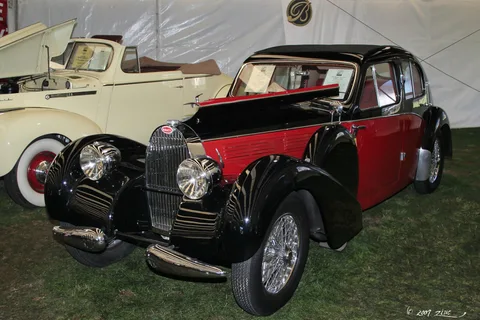
Atlantic გადაპრაკული და დაბალმილაფრიან Type 57 S შასიზე იდგა, თვითონ კი მყარი უქელებად გაწყობილი ორგანული ალუმინის სხეული ეხურა. მტევანი დორსალური ხაზი ჩრახტებით სულ საბოლოოდ ცხვირ-ბალონდან თან ათავსებდა სპლიტ-V ამწოში ეკრანზე და ზუსტად თათთვალისმაგვარი ბდის ხატად მთავრდებოდა. ნაცრის ფარიანი ფარები, ჩაწეული კაპოტი და მკვტრიალა ლოსო-შუბის სახურაო ჯერ კიდევ აღარ აჩვენებს საუკუნის წინათ უკვე დაგვიმიწებული ხედი.
გამოშვება
ოფიციალურად „ატლანტოს“ რაოდენობა დოქუმენტში არ მოინიშნება, მაგრამ მაშინდელი წინათქმები ერთიანია — ოთხი. სამი გადარჩა; შასი 57453, რომელიც ჯან-ბუგატის საკუთარი მანქანა იყო, მეორე მსოფლიო ომის პერიოდში მოსვენება დაიკარგა და დღემდე პლანეტის ყველაზე ძვირფასი მკვდარი მარკაა.
მემკვიდრეობა
ოცდამეშვიდე საუკუნის დასაწყისში, Atlantic-ის მდინარე-მიმზიდველი პროპორციები პირდაპირ წაადგა Bugatti Veyron-ისა და Chiron-ის თეილორ-ატლანტოს სპეცსერიების გუნდს. დარჩენილი მანქანების აუქციონი შტადა 30 მილიონ დოლარამდე ავიდა და პრე-ვოიარული ავტოკულტის ბრწყინვალე სიმბოლოდ ჩამოაყალიბა.
English version
Between 1936 and 1938 Bugatti’s Molsheim workshops produced just four Type 57 Atlantics—supercharged coach-built coupés whose riveted aluminium spines and teardrop lines fused Grand Prix technology with avant-garde art-deco styling.
Design
Built on the shortened and lowered Type 57 S chassis, the Atlantic wore a hand-formed aluminium body distinguished by a prominent dorsal seam of external rivets running from the split V-shaped windscreen to the teardrop tail. Coal-scuttle headlights, faired-in fenders and a sharply raked roof gave the car an unmistakable silhouette that still looks futuristic nearly a century later.
Production
No official factory documents list exact numbers, but contemporary sources agree only four Atlantics were completed. Three have survived; chassis 57453 (once Jean Bugatti’s personal car) vanished during World War II and remains the most valuable missing automobile in the world.
Legacy
Decades later, the Atlantic’s flowing proportions became a direct inspiration for the 21st-century Bugatti Veyron and Chiron Atlantic-inspired one-offs. Auction prices for the remaining cars have exceeded US$30 million, underscoring its position as one of the most sought-after pre-war machines.