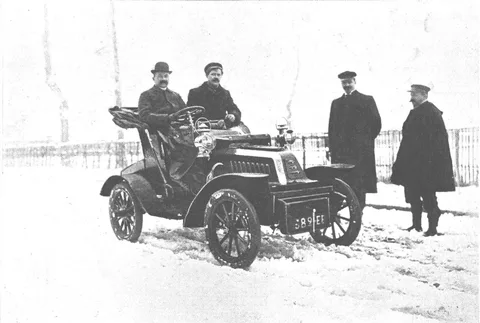
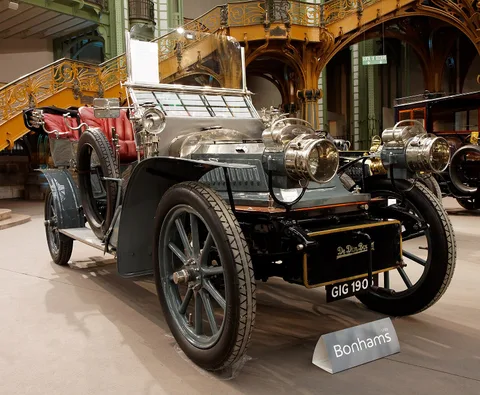
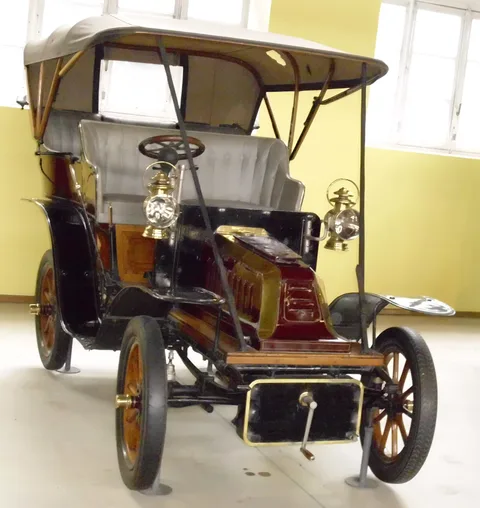
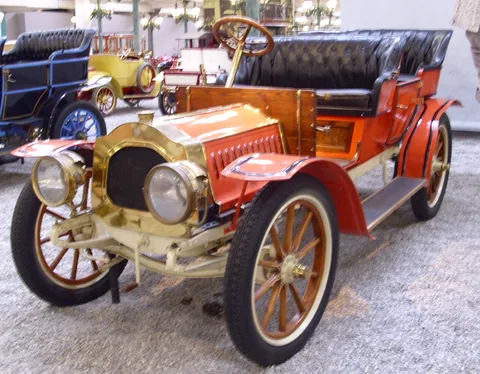
De Dion-Bouton Type W
იქამდე, სანამ ფრანგული სალონური მაყოფრები ტანკებისთვის მუშაობას დაიწყებდნენ, De Dion-Bouton-მა Type W შექმნა — მსუბუქი, ელეგანტური გასტროლერი, რომელმაც კომპანია კუპის პატარა ერთცილინდრიან ვუატურეტებს მიღმა გაიყვანა.
ისტორია
De Dion-Bouton მთელ ევროპაში პირველი ავტოების სიმბოლო იყო, როცა Type W ერთპიროვნულად გამოჩნდა — პასუხი იმ მძღოლებზე, რომლებსაც 1890-იანების მინიმალისტურ ვუატურეტებზე მეტი ადგილი და კომფორტი სურდათ. ზუსტი თარიღები ან რაოდენობა არ აქვთ შემონახული, თუმცა გადარჩენილი შასის ნომრები და ფრანგული რეგისტრაციები მიუთითებენ, რომ მოდელი XX საუკუნის პირველი ათწლეულის დასაწყისში იყო ხაზზე. მან კომპანიას ტექნიკური სრულყოფილების რეპუტაცია კიდევ უფრო გაამყარა.
ტექნიკა
Type W ინარჩუნებდა კომპანიის სახელობის ერთ- ან ორცილინდრიან მატორს, ჩამოსაყენებულს პრესინგის ფოლადის შასიში, სადაც თავად გრაფმა დე-დიონმა პატენტირებული sliding-pinion საჭე დადო. წყნარი ჯაჭვ-და-გადაცემის მექანიზმი უკანა ბორბლებზე გადასცემდა ძალას, ხოლო ფორთოხლისფერი ფირფიტიანი დამკიდი და მოსახსნელი artillery ტიპის ბორბლები გზაზე თვითგამოსავალს ხდიდა, როცა სერვისის ქსელი ჯერ არ არსებობდა.
დიზაინი და ვერსიები
ქარხნის ბროშურები Type W-ს სამ სხვადასხვა ბაზაზე შემოგვთავაზებს — 2.0 მ, 2.2 მ და 2.4 მ. ასამოსხმად ცნობილი ფრანგი „კაროსიეები“ — Million-Guiet, Binder და სხვები — ირჯებოდნენ. ოთხ- თუ ექვსადგილიანი ღია ტონოს კარეტები ჭარბობდა, თუმცა სანაპირო ბაზარმა და ბრიტანეთმა დახურული landaulet-ები და coupé-ებიც დაინახეს. ჩამოსხმული ალუმინის პანელები და სპილენძის დეტალები ტრენდად იქონიეს მოდელის გაუქმებამდე.
English version
Before France’s premier coachbuilders turned their talents to tanks, De Dion-Bouton created the Type W, a light, stylish runabout that expanded the company’s reach beyond its famed single-cylinder voiturettes.
History
In an era when De Dion-Bouton dominated early European motoring, the Type W emerged as the marque’s answer to drivers who wanted more space and comfort than the minimalist voiturettes of the 1890s. Little survives on exact production dates or volumes, but surviving chassis plates and period French registrations indicate the model was offered during the first years of the 20th century, consolidating the firm’s reputation for technical refinement.
Engineering
The Type W retained the company’s signature single- or twin-cylinder engines fitted in a pressed-steel chassis with a unique sliding-pinion steering system patented by Count de Dion. A quiet chain-and-sprocket final drive delivered power to the rear axle, while leaf-spring suspension and detachable artillery-type wheels made roadside repairs feasible in an age before service networks.
Design & Variants
Factory brochures list the Type W in three wheelbases—2.0 m, 2.2 m and 2.4 m—each clothed by specialist French carrossiers such as Million-Guiet and Binder. Open tonneau bodies for four or six passengers dominated, though closed landaulet and coupé variants appeared in homeland and British markets. Cast-aluminum dashboards and brass trim remained fashionable hallmarks up to the model’s discontinuation.