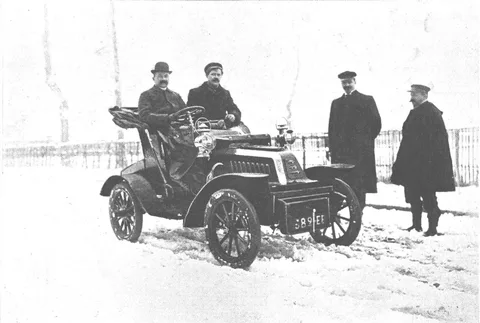
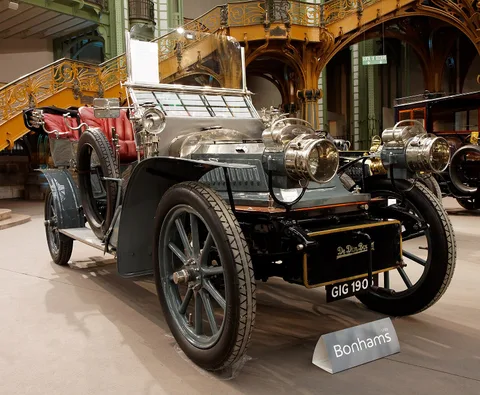
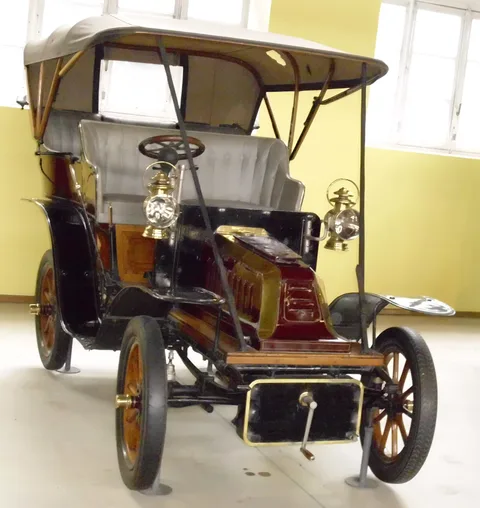
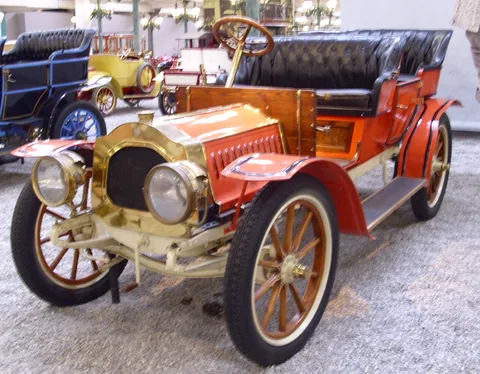
De Dion-Bouton Type D
1900 წელს გამოსული De Dion-Bouton Type D არის ერთ-ერთი პირველი ავტომობილი, რომელმაც საყოველთაოდ იარაღში ჩააგდო ბენზინზე მომუშავე გადაადგილება საფრანგეთის შუა ფენისათვის და სათაურად ჩაიწერა გარაჟიდან სახურავამდე გადასვლის სიმბოლო.
ისტორია
გეორგი ბუტონმა და ალბერ დე დიონმა 1893-ში პირველი ერთცილინდრიანი მატორი, 1898-ში კი უკანა ბორბლებზე მოთავსებული მოძრაობის დაქანძვა გააცურეს ინდუსტრიაში. ახალი საუკუნისთვის კომპანიამ Type D წარმოგვიდგა — პირველი სერიული მგზავრული მოდელი, სამკაპელიანების წარმატების შემდეგ. ძირითადად პარიზის ექიმები და მცირე მტკივნეულები ყიდულობდნენ, და ასე გადამდგარა De Dion-Bouton ხელოსნიდან სერიოზულ მწარმოებლად.
მოწყობა და საინჟინრო ხერხი
ნაგებობრივად მოკლემძიმი tonneau ორი ადგილითაა, გაიარ-გამოიაროს ძელის ჩარჩოზე. სულის ძრავათ იყენებს 402 სმ³ ერთცილინდრიან ოთხტაქტიანს, რომელსაც დაახლოებით 3.5 ძალა აქვს. ძრავა ტრანსვერსალურად, უკანა ცალის წინ დგას, ერთი ჯაჭვით აძლევს მოძრაობას ცოცხალ უკანა ცალს. საანთებელად თბირი მილი იყო, ბენზინის მიწოდება — ფალია ბენზინაპურით, ხოლო დამურღვევაც შემხებელი ბერკეტით მიმდებარე ბორბლებზე. სალიტერე კარკასი მსუბუქი ხისაგან, გულათბილად კი ტყავგადაწყობილი დივანი.
მემკვიდრეობა
მხოლოდ რამდენიმე წელიწადი იწარმოება, მაგრამ Type D ერთხელ და სამუდამოდ დაამტკიცა, რომ ხელმისაწვდომი და არსებული ბენზინული მანქანები რიგში რომ უნდა გამოვიდნენ, ერთ-ერთის გამოცხობას კი არა. დაახლოებით 250 ეგზემპლარი გამოშვებულა, დიდი ნაწილი კი მექანიკის სიმტკიცისა და ფრანგული Veteran Car Club-ის დამართვის წყალობით ამ დრომდე გადარჩა. დღესაც შთამბეჭდავი საკოორდინატოა ლონდონი-ბრაიტონის რალზე და სხვა ვეტერანთა გამზირებზე — ლაბორატორიული ნიმუშებისა და მასობრივად გამოსული მობილობის შემაკავშირებელი ფირცხალი კოჭა.
English version
Released in 1900, the De Dion-Bouton Type D stands among the earliest automobiles to bring petrol-driven transport within reach of the French middle class, signaling the shift from novelty to everyday mobility.
History
Engineers Albert de Dion and Georges Bouton had already revolutionized the industry with their 1893 single-cylinder engines and 1898 rear-axle engines. The Type D arrived at the turn of the century as their first standardized production passenger model, following the success of their voiturette tricycles. Sold primarily to Parisian doctors and merchants, it marked De Dion-Bouton’s transition from specialist builder to genuine car manufacturer.
Design & Engineering
A compact two-seat tonneau on a simple ladder frame, the Type D used a 402 cc single-cylinder four-stroke delivering roughly 3.5 hp. The engine was placed transversely ahead of the rear axle, driving through a single chain to a live rear axle. Ignition was by hot tube, fuel feed via wick carburettor, and braking was handled solely by a hand-lever on the rear wheels. The bodywork was lightweight timber framing skinned with steel over a leather-upholstered bench.
Legacy
Though only produced for a few short years, the Type D proved that affordable, competent petrol cars could be turned out in numbers rather than built one at a time. Around 250 were made, many surviving thanks to robust engineering and the subsequent formation of societies like the Veteran Car Club of France. Today it remains a sought-after artifact at London-to-Brighton and similar veteran rallies, representing the bridge between experimental prototypes and mass-market motoring.