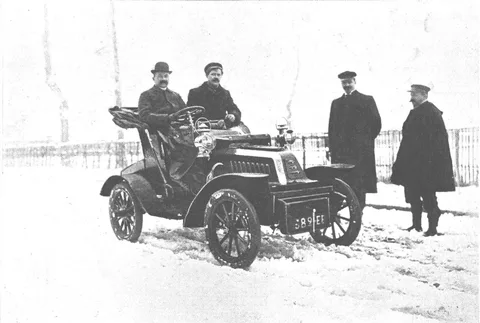
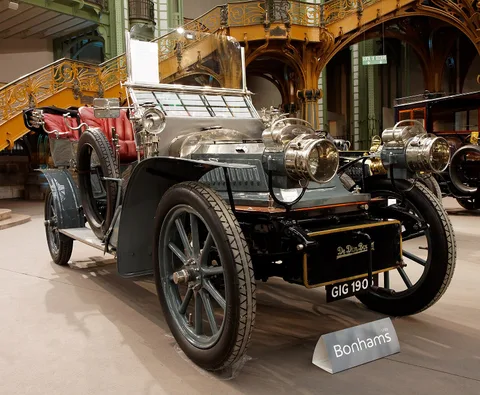
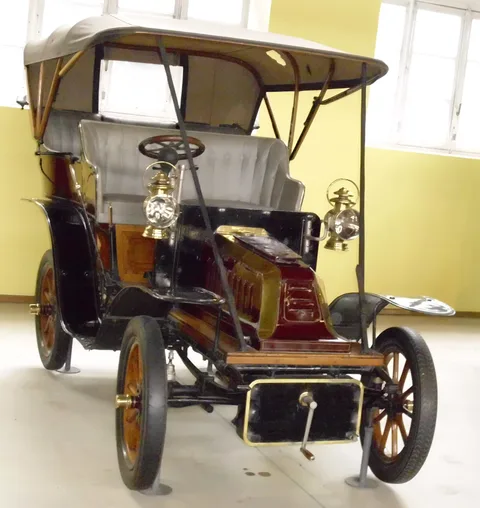
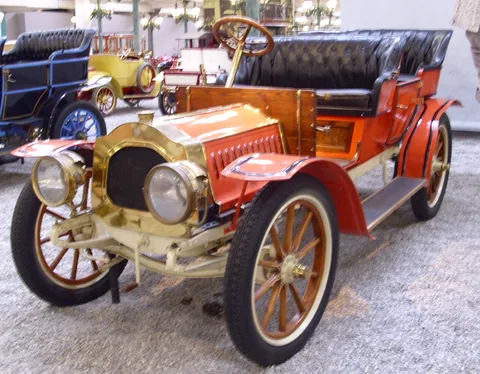
De Dion-Bouton Type BG
დიონ-დე-ბუტონის Type BG — პარიზული სახელოსნოს ნაშრომი, რომელმაც მასობრივი ავტომობილების წარმოებას თითქმის იქ ჩაუყარა საფუძველი ჯერ კიდევ XIX საუკუნეში. მოდელი წლების გასვლით უკვე სხვა ფორმატში შეეფარდა: ერთბარიან voiturette-ებს ზემოთ დაიდგა, მაგრამ ინჟინრული გეგმა კვლავ იგივე იმყოფებოდა — უბრალოდ მოცულობა გაიზარდა, რომ ოთხ ადამიანს მოერგოს.
როგორ დაიბადა
1883 წელს დაფუძნებული De Dion-Bouton მთელი ევროპისთვის სახელოვანი გახდა მას შემდეგ, რაც 1895 წელს პირველ სასტარტო მაღალსიჩქარიან ბენზინის ძაროს წარადგინა. Type BG კი — დაახლოებით XIX–XX საუკუნეების ზღვარ–ზღვარზე — წინა Type M და N-ის ორ ბარიან რიგს ითავსებდა, ოღონდ უფრო გრძელ ბაზა–ჩარჩოებში გადაიტანა, რომ ოთხპატივიან ილეთსაც მოერგოს.
მშენებლობა და ზონები
დაპრესილი ფოლადის რაბი, ფაიფურიანი რადიატორი და კარდანის ხაზი უკანა ხიდისაკენ — დროული მეტალის მოდულების პირველი ნიშანიასვლა იყო. გვერდითი კამშაფტი შვრიის კლაპანებს ამოძრავებდა, რაც პლუს–მინუს მომსახურებას უფრო ნათქვამად ხდიდა. ხის ლურსმული თვლები და ფოთლოვანი პრужინები კი — რურუალური გზების ხერხემალი, რომელიც სიამოვნებას მტკიცება არ ეზარებოდა.
კატალოგის ადგილი
ლომბარდის ადრეული taxi-ები თუ პროვინციული ექიმები ხან ყოყამოდნენ — სიხშირის მცირე სიჩქარი არ მიეკეთებინათ, მაგრამ გრანდიოზულ ძრავებში ფული არ შეჰქონდათ. BG ზუსტად ეს „შუა ხანია“ — voiturette-ზე მძლავრი ხოლო Type AD-ზე მსუბუქ ტორ. ჩვეულებრივი ბიზნესის ყველაზე პრაგმატული პასუხი.
English version
De Dion-Bouton Type BG emerged from the Parisian workshop that pioneered automotive mass production in the late 19th century. Slotting above the brand’s single-cylinder voiturettes, this model carried forward the firm’s consistent engineering philosophy while reaching a slightly larger customer base.
Origins
Founded in 1883, De Dion-Bouton cemented its reputation with the first practical high-speed petrol engine in 1895. The Type BG, arriving around the turn of the century, relied on the same two-cylinder powerplant that had powered earlier Type M and N models, yet packed it into a longer-wheelbase chassis suited for four passengers.
Design & Engineering
A pressed-steel frame, honeycomb radiator and shaft-drive rear axle made the Type BG feel modern compared with belt-driven contemporaries. Vertical valves actuated by a side camshaft kept maintenance straightforward for the era, while wooden artillery wheels plus leaf-spring suspension balanced comfort with the durability required by France’s rapidly improving rural roads.
Role in the Catalogue
Occupying the middle ground between the brand’s lightweight voiturettes and the larger Type AD, the BG attracted doctors, merchants and early taxi operators who needed a reliable, faster tourer than a single-cylinder runabout could provide yet could not justify a multi-liter luxury chassis.